

There’s a version of weeknight cooking that most people know well: you get home tired, open the fridge, stare at random ingredients with no plan, and end up ordering takeout for the third time this week.
Freezer meal prep is the solution to that exact problem.
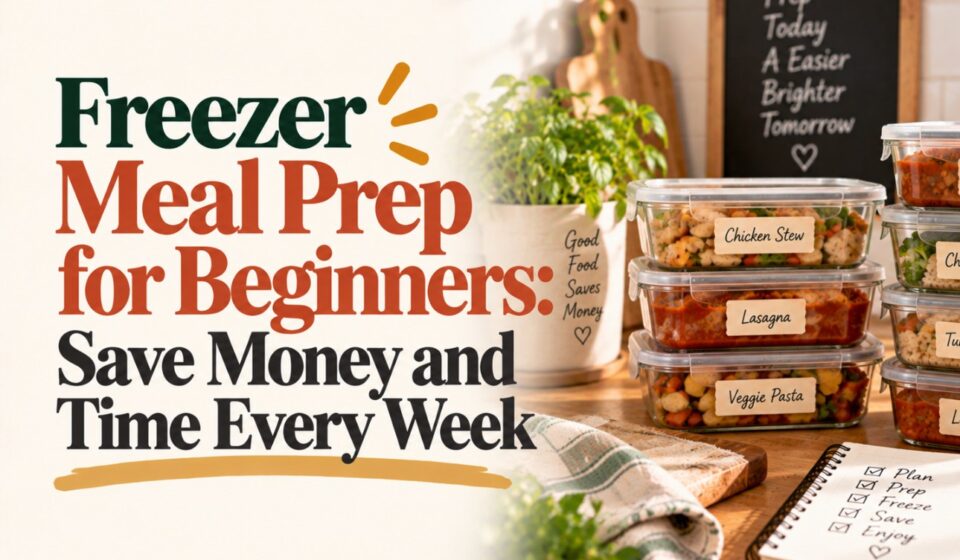
The idea is simple: on one day — usually a weekend — you cook larger batches of meals or components, portion them into containers, and freeze them. On busy weeknights, you pull something from the freezer, reheat it, and have a real home-cooked meal on the table in minutes. No stress, no decision fatigue, no takeout.
The money-saving impact is significant. Home-cooked meals cost a fraction of takeout. Batch cooking reduces food waste. Buying ingredients in larger quantities for a cook session is cheaper per meal than buying for one dinner at a time. And the time investment is surprisingly low — a few hours once a week or once a month produces meals that pay dividends for weeks.
This guide is for complete beginners — no fancy equipment, no complicated recipes, no all-day Sunday sessions required.
If you’re working on reducing your food spending, freezer meal prep is the natural companion to our meal planning on a budget system, the budget-friendly meals you’re already cooking, and the stop wasting food habits we covered. It ties all three together into one practical system.
Why Freezer Meal Prep Saves So Much Money
The financial case for freezer meal prep comes from several directions simultaneously:
It kills the takeout habit. The most expensive meal of any week is the one you didn’t plan for. When you’re tired and hungry with nothing ready to eat, takeout is the path of least resistance. A freezer full of real meals removes that option entirely — dinner is already done, it just needs reheating.
Batch cooking is cheaper per meal. Buying a 5lb pack of chicken for a big cook session costs less per pound than buying a smaller pack for one dinner. The same applies to vegetables, canned goods, and almost every ingredient. Cooking in volume inherently reduces cost per serving.
It prevents food waste. Ingredients that might go bad before you use them get cooked and frozen instead. Nothing gets forgotten at the back of the fridge. Every dollar of groceries you bought becomes food you actually eat.
It reduces impulse food spending during the week. When dinner is handled, you’re less likely to stop for fast food on the way home, order lunch delivery because you’re already thinking about dinner stress, or grab expensive convenience food at the grocery store.
What You Actually Need to Get Started
The barrier to freezer meal prep is lower than most people think. You don’t need a chest freezer, a vacuum sealer, or a pantry full of specialized containers.
Containers: Freezer-safe zip-lock bags (lay flat for efficient storage), disposable aluminum trays for casseroles, or reusable plastic or glass containers with tight-fitting lids. Start with what you have and upgrade as needed.
A marker and tape or labels: Date and label everything. A freezer full of mystery containers is a food waste problem waiting to happen.
Your regular cooking equipment: A large pot, a sheet pan, a skillet. Nothing special.
A few hours: Not a full day. Start with two or three hours and work up from there as the habit develops.
That’s it. Freezer meal prep is accessible to anyone with a standard kitchen and a standard freezer compartment.
THRIFTY HABIT #48 Before your first freezer meal prep session, spend ten minutes clearing and organizing your freezer. Know exactly how much space you’re working with before you cook. Nothing is more frustrating than finishing a big cook session and discovering you have nowhere to put anything.
What Freezes Well (And What Doesn’t)
Not everything is worth freezing. Knowing the difference before you cook saves you from disappointment.
Freezes Beautifully
Soups and stews — arguably the best freezer food there is. They freeze perfectly, reheat evenly, and often taste better after freezing as the flavors meld. Our red lentil soup and white bean stew from the budget-friendly meals guide are ideal candidates.
Chili — one of the easiest and most satisfying freezer meals. Make a huge pot, freeze in portions, and you have lunches and dinners ready for weeks.
Pasta sauces — freeze the sauce, not the pasta. Pasta is cooked fresh in minutes and always tastes better that way. A batch of tomato sauce, bolognese, or arrabbiata freezes perfectly for 3 months.
Cooked grains — rice, quinoa, farro. Freeze in portion-sized bags, reheat from frozen in the microwave. A batch of rice takes 20 minutes to cook and provides a base for a week of quick meals.
Marinated raw meat — add your marinade to raw chicken, beef, or pork, freeze it all together. It marinates as it thaws. When you’re ready to cook, pull it from the freezer the night before. Minimal prep, maximum flavor.
Casseroles and bakes — lasagna, enchiladas, shepherd’s pie, pasta bakes. Make double, freeze one. The second one costs almost nothing in extra time and gives you a complete meal ready to go.
Cooked beans and lentils — cheaper than canned and just as convenient once frozen in portions. Cook a large batch of dried beans, freeze in one-cup portions, and use as you would a can of beans.
Meatballs and burger patties — freeze raw on a sheet pan until solid, then transfer to a bag. Pull out exactly how many you need without defrosting the whole batch.
Muffins, pancakes, and waffles — freeze individually, reheat in the toaster. A batch of banana muffins or weekend pancakes becomes a week of quick breakfasts.
Doesn’t Freeze Well
Cooked pasta — goes mushy when frozen and reheated. Always freeze the sauce separately and cook fresh pasta.
Potatoes in soups and stews — they become grainy and unpleasant after freezing. Add potatoes fresh when reheating, or substitute with sweet potato which freezes better.
Cream-based sauces — they tend to separate when frozen. Alfredo, cream soups, and dishes with a lot of dairy are better made fresh.
Fried foods — lose their crispiness completely when frozen and reheated. Not worth it.
Salad and raw greens — obviously. Never freeze these.
Egg-based dishes — scrambled eggs and egg-heavy casseroles don’t reheat well. Hard-boiled eggs become rubbery.
Cucumbers, lettuce, and watery vegetables — become completely mushy. Use these fresh only.
How to Structure a Beginner Freezer Meal Prep Session
The key to making freezer meal prep sustainable is keeping the first few sessions simple. Don’t try to fill your entire freezer in one afternoon. Start with two or three things and build the habit from there.
Step 1: Plan What You’re Making
Choose two or three recipes that freeze well and that your household genuinely likes. For a beginner session, a good starting combination might be:
- A big pot of soup or chili (one recipe, huge return on effort)
- A batch of cooked rice to freeze in portions
- A simple pasta sauce
That’s it for session one. Three things. Two to three hours. A week of easy dinners.
Step 2: Make a Consolidated Shopping List
Look at all your recipes together and write one combined shopping list. You’ll often find that recipes share ingredients — the same can of tomatoes, the same onion, the same garlic. Buying for multiple recipes at once is more efficient and often cheaper per meal than buying for one recipe at a time.
Step 3: Prep Before You Cook
Before turning on any heat, do all your chopping, measuring, and prep work. Dice all your onions at once. Mince all your garlic. Open all your cans. Having everything ready before you start cooking means multiple things can happen simultaneously without chaos.
THRIFTY HABIT #49 When you’re chopping onions for one recipe, chop twice as many as you need and freeze the extra in a bag. Pre-chopped frozen onions are genuinely useful for weeknight cooking — they go straight from freezer to pan with no prep. Same for peppers, celery, and other aromatics.
Step 4: Cook With the Freezer in Mind
While one thing is simmering, start another. Use the oven and stovetop simultaneously where possible. The goal is to produce multiple meals in the same time it would take to make one.
A practical example of parallel cooking:
- Chili on the stovetop simmering for 45 minutes
- Rice cooking in a pot simultaneously
- Sheet pan of roasted vegetables in the oven
One cooking session, three freezer-ready components, maybe 90 minutes of active time.
Step 5: Cool Completely Before Freezing
Never put hot food directly in the freezer — it raises the freezer temperature and can affect other items. Let everything cool to room temperature, then refrigerate until cold before freezing.
For soups and stews, speed up cooling by placing the pot in a sink filled with ice water and stirring occasionally. From boiling to room temperature in 20-30 minutes.
Step 6: Portion, Label, and Freeze
Divide into meal-sized portions before freezing — not one giant container that requires thawing the entire batch for one meal.
Label every container with:
- What it is
- The date it was made
- Any reheating instructions if not obvious
Flat zip-lock bags stack efficiently in the freezer and thaw faster than rigid containers. For soups and stews, freeze in bags laid flat — they stack like books once solid and take up minimal space.
A Simple First Freezer Meal Prep Plan
Here’s a complete beginner session that takes about 2.5 hours and produces 8-10 meals:
Big Pot of Chili (makes 6-8 portions)
- 2lbs ground beef or turkey
- 2 cans kidney beans
- 2 cans diced tomatoes
- 1 can corn
- Chili powder, cumin, garlic, onion
- Cost: ~$12-15 total, ~$1.50-2.50 per portion
Batch of Rice (makes 8 portions)
- 3 cups dry rice
- Cost: ~$1.00 total, ~$0.15 per portion
Simple Tomato Pasta Sauce (makes 4-6 portions)
- 2 cans crushed tomatoes
- Garlic, onion, olive oil, basil, oregano
- Cost: ~$4-5 total, ~$0.75-1.00 per portion
Total cost: ~$18-21. Total meals produced: 10-14 (chili over rice, pasta with sauce). Cost per meal for two people: ~$2-3.
Compare that to takeout at $30-50 for two people and the math speaks for itself.
Building the Habit: Once a Week vs Once a Month
There are two main approaches to freezer meal prep and neither is wrong — it depends on your schedule and how you like to cook.
Weekly prep (small batches): Every week you make one or two things extra — double a recipe you’re already making, cook a batch of grains, make a pot of soup. The freezer stays stocked without any single big session. This is the most sustainable approach for most people because it requires no special time commitment — just intentional doubling of what you’re already doing.
Monthly prep (big sessions): Once a month you dedicate a longer session — 4-6 hours — to cooking a large number of meals at once. The freezer gets fully stocked, you have a month of backup dinners, and you don’t have to think about prep for weeks. This works well for people who prefer batching their effort.
Most beginners find the weekly approach easier to start with. Once the habit is established, some people shift to monthly sessions when they want to go bigger.
WORTH IT / SKIP IT Investing in a small chest freezer for meal prep: WORTH IT if you have the space and regularly do big prep sessions — the extra storage capacity transforms what’s possible. SKIP IT if you’re just starting out — a standard freezer compartment is plenty for beginning meal prep, and you can always upgrade later if you outgrow it.
Reheating: Getting It Right
The meal prep is only as good as the reheating. A few tips that make a difference:
Thaw overnight in the fridge when possible. Food thawed slowly in the refrigerator maintains better texture and reheats more evenly than food thawed quickly in the microwave. Pull tomorrow’s dinner from the freezer tonight.
Reheat soups and stews on the stovetop rather than the microwave for better texture — medium heat, stirring occasionally, add a splash of water or broth if it’s thickened too much in the freezer.
Add fresh elements when reheating. A squeeze of lemon, fresh herbs, a handful of spinach stirred in, a dollop of sour cream — these small additions make frozen meals feel fresh rather than reheated.
Don’t microwave in plastic bags. Transfer to a microwave-safe container first.
The Cumulative Impact
Freezer meal prep is one of those habits where the benefit compounds over time.
The first session takes the longest because everything is new. The second is faster because you know the process. By the fifth or sixth session it’s just cooking — efficient, automatic, and producing a freezer stocked with real food at a fraction of what those same meals would cost as takeout.
Combined with the meal planning, discount grocery shopping, and food waste reduction habits we’ve covered in this series, freezer meal prep closes the loop on food spending. You plan what you buy, you buy it cheaply, you cook it efficiently, and you waste almost none of it.
That’s what a genuinely low food budget looks like in practice — not deprivation, just a system that works.
Have you tried freezer meal prep before — and what’s your go-to freezer meal? Drop it in the comments, I’m always looking to add to the rotation!