
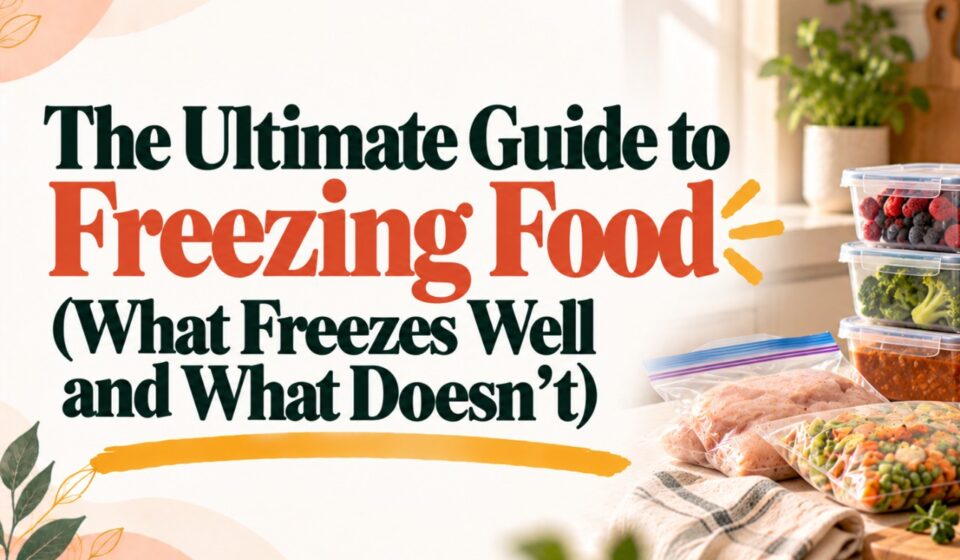

The freezer is the most underused financial tool in most kitchens.
Not metaphorically — literally. The average household freezer contains a few bags of frozen peas, some ice cream, and a couple of mystery items from last year wrapped in frost-damaged plastic. Meanwhile, the fridge runs a constant cycle of fresh produce bought with good intentions that slowly wilts into the compost bin.
A well-used freezer changes the financial math of cooking entirely. It’s the difference between buying what’s on sale and using it whenever versus buying only what you’ll use this week at whatever price it happens to be. It’s the difference between cooking once and eating twice versus cooking every night or ordering when you don’t have time. It’s the difference between produce that goes bad in three days and produce that stays perfectly usable for six months.
This guide covers what actually freezes well, what doesn’t and why, how to freeze things properly so they stay good, and the specific strategies that turn a freezer into a significant ongoing financial resource.
Why Freezing Saves Money (The Actual Mechanisms)
Before the how-to, understanding why freezing produces financial savings clarifies which strategies matter most.
It lets you buy on sale and use anytime. Chicken thighs on sale for $1.49/lb instead of the regular $2.89/lb — buy five pounds and freeze four. The sale price is locked in regardless of what prices do between now and when you use it. Applied consistently across proteins, produce, and pantry items, strategic sale purchasing with freezing can reduce food costs by 15-30%.
It eliminates waste from fresh food spoilage. The USDA estimates that American households waste 30-40% of their food. A significant portion of that is fresh food that spoiled before being used. Freezing extends the useful life of almost everything — turning a 3-day window into a 3-month one.
It enables bulk cooking economics. Cooking six portions of something costs barely more in time and energy than cooking two. Freezing the extra four portions produces four future meals at nearly zero marginal cost — where the alternative is cooking from scratch four more times or ordering takeout.
It creates emergency meal insurance. A freezer stocked with ready-to-heat meals, cooked grains, and ready-to-cook proteins means that the “I have nothing to make, let’s order something” moment rarely arrives. The emergency takeout order — typically $20-40 — is one of the most reliably preventable food costs in any household.
What Freezes Excellently
Cooked Grains and Legumes
One of the most practical things you can freeze and one of the most underused.
Rice: Cooked rice freezes perfectly. Spread on a baking sheet to freeze individually, then transfer to a bag. Reheat from frozen in 2-3 minutes in the microwave with a tablespoon of water. Indistinguishable from freshly cooked.
Quinoa, farro, barley, oats: All freeze the same way as rice with the same results. Cook large batches, freeze in 1-cup portions, use as needed.
Cooked beans and lentils: This is genuinely one of the best freezer practices for frugal cooking. Dried beans cooked from scratch cost 60-70% less than canned — but require planning ahead. Batch cooking dried beans and freezing in 1.5 cup portions (equivalent to one can) gives you the cost of dried beans with the convenience of canned. As covered in our cheap protein sources guide, beans are one of the most economical proteins available — and the freezer makes them practical.
How long: Cooked grains and legumes keep up to 3 months in the freezer with no quality loss.
Proteins — Raw and Cooked
Raw meat and poultry: Freezes well from the grocery store package. For best results, divide into meal-sized portions before freezing rather than thawing a large package and refreezing (refreezing partially thawed meat is safe but affects texture). A family pack of chicken thighs divided into 2-portion bags is far more practical than thawing a 6-pound package for a 2-person dinner.
Freezer life: Chicken 9-12 months, beef 4-12 months depending on cut, pork 4-6 months, fish 2-6 months. These are quality timelines, not safety timelines — frozen meat is safe indefinitely though quality degrades over time.
Ground meat: Both raw and cooked ground meat freeze excellently. Cooked seasoned ground meat (browned with onion, garlic, and basic seasoning) portioned into half-cup amounts is one of the most versatile freezer staples — goes into pasta sauce, tacos, grain bowls, and soups in minutes from frozen.
Fish and seafood: Freezes well but degrades faster than other proteins. Wrap tightly to exclude air. Best used within 2-3 months for quality.
Cooked chicken: Shredded or sliced cooked chicken freezes well and is one of the most practical things to batch cook and freeze. Portioned in 1-2 cup servings, it goes into soups, bowls, pasta, sandwiches, and tacos directly from frozen.
Hard-boiled eggs: Do NOT freeze — the whites become rubbery and watery. Keep in the fridge, eat within a week.
Vegetables
Almost all vegetables can be frozen — but most benefit from blanching first. Blanching (brief boiling followed by immediate ice bath) stops the enzymes that cause deterioration during freezing, preserving color, texture, and nutritional value.
Blanching times for common vegetables:
- Broccoli and cauliflower: 3 minutes
- Carrots (sliced): 3 minutes
- Green beans: 3 minutes
- Corn (kernels): 4 minutes
- Peas: 1.5 minutes
- Spinach and leafy greens: 2 minutes
Vegetables that freeze without blanching: Onions (chopped), peppers (sliced), zucchini (grated for baking), tomatoes (whole or crushed for cooking), butternut squash (cubed and roasted first).
Vegetables that don’t need blanching because they’ll be cooked anyway: Any vegetable going into soups, stews, curries, or other cooked dishes can be frozen raw without blanching — it will cook directly from frozen.
THRIFTY HABIT #205 When you buy fresh vegetables and can’t use them all within a few days, freeze the remainder instead of letting them go to waste. Spinach wilting in the bag? Freeze it — it’s perfect for smoothies, soups, and curries from frozen. Peppers about to turn? Slice and freeze — they’re fine for cooking. Tomatoes getting soft? Freeze whole — they’re excellent in cooked sauces. The freezer is always the better choice over the compost bin.
Roasted vegetables: Freeze after roasting for a different (and equally useful) product. Frozen roasted vegetables reheat quickly in the oven or microwave and retain their flavor. Less crispy than fresh-roasted but perfectly serviceable for bowls, soups, and side dishes.
What doesn’t freeze well — raw: Lettuce and salad greens (water content too high, turns to mush), cucumber, celery (acceptable in cooked form but not raw), raw potatoes (texture changes dramatically — freeze as mashed potato or cooked potato chunks instead).
Fruits
Most fruits freeze well with minimal preparation.
Berries: Scatter on a baking sheet, freeze until solid, then transfer to bags. This prevents them from clumping into a solid mass. Frozen berries are perfect for smoothies, oatmeal, yogurt, baking, and sauces. As covered in our eat healthy on $50 a week guide, frozen berries are nutritionally equivalent to fresh and consistently cheaper.
Bananas: Peel and freeze — excellent for smoothies, banana bread, and oatmeal. The frozen banana is actually a better smoothie ingredient than fresh because it creates creaminess and coldness simultaneously.
Mangoes, peaches, and stone fruits: Peel, slice, arrange on a sheet, freeze, then bag. Perfect for smoothies and baking.
Citrus: The juice freezes well in ice cube trays. The whole fruit doesn’t freeze usefully.
Avocados: Freeze the mashed or pureed flesh (not the whole avocado). Works for guacamole and as an addition to smoothies. Add lemon or lime juice to prevent browning before freezing.
What doesn’t freeze well: Watermelon and other high-water-content fruits (turns mushy), grapes (edible but texture changes significantly).
Dairy
Milk: Freezes well but expands when frozen — leave headspace in the container. Thaw in the refrigerator. May separate slightly — just shake or stir. Great for buying in bulk when on sale.
Butter: Freezes perfectly for up to a year. Buy when on sale and stock up. One of the easiest and most financially beneficial freezer buys.
Hard and semi-hard cheeses: Parmesan, cheddar, mozzarella, Swiss — all freeze well when shredded. Texture softens slightly but is indistinguishable in cooked applications. Pre-shred before freezing in portion-sized bags.
Soft and fresh cheeses: Cream cheese, ricotta, and cottage cheese change texture significantly when frozen — acceptable for baked applications but not for fresh use.
Yogurt: Freezes well for smoothies and frozen treats but separates when thawed for eating. Fine as a frozen smoothie ingredient.
Eggs: Freeze without shells. Crack into a container, beat lightly, freeze. Good for baking and scrambled eggs but not for fried or poached applications. Alternatively, freeze egg whites and yolks separately.
Baked Goods and Bread
Bread: One of the best things to freeze. Sliced bread freezes perfectly — pull individual slices directly from frozen and toast. Buys you significant time on a loaf that would otherwise go stale or moldy in 4-5 days.
Homemade bread: As covered in our make your own bread guide, slicing a homemade loaf and freezing means homemade bread is available any time without planning ahead — just toast directly from frozen.
Muffins, cookies, and individual baked goods: Freeze individually on a sheet, then bag. Pull out as many as needed — perfect for packed lunches and snacks.
Pizza dough and pie crusts: Freeze after preparing, before baking. One of the best time-saving strategies for from-scratch cooking — make a double batch of dough, freeze half, thaw overnight in the fridge when needed.
Pancakes and waffles: Freeze and reheat in the toaster. Makes homemade pancakes and waffles as convenient as the boxed frozen versions at a fraction of the cost.
Soups, Stews, and Sauces
Probably the single highest-impact freezer practice. A pot of soup costs nearly the same to make in a 12-serving batch as in a 4-serving one. Freezing the extra 8 servings produces future meals at essentially zero marginal cost.
What freezes best: Clear broths and stock (freezes perfectly, one of the best freezer items), tomato-based sauces (freezes excellently), bean and lentil soups (freezes very well), meat-based stews (freezes well), chili (freezes excellently).
Potato-based soups: Potatoes become mealy when frozen. Either freeze before adding potatoes and add fresh when reheating, or blend the soup completely before freezing.
Cream-based soups: Dairy separates when frozen, changing texture. Freeze the base without cream, add cream when reheating.
Pasta in soup: Pasta becomes mushy when frozen and reheated. Freeze the soup without pasta and cook fresh pasta when reheating.
Stock and broth: One of the most financially valuable things to freeze. As covered in our stop wasting food guide, vegetable trimmings, chicken carcasses, and bones accumulate in a freezer bag until there’s enough to make a pot of stock — essentially free, high-quality broth that costs $3-5 at the store per carton.
What Doesn’t Freeze Well (And Why)
Understanding the why makes it easier to remember the rules.
High water content, meant to be eaten raw: Lettuce, cucumber, raw tomatoes for salad, watermelon. Freezing forms ice crystals that rupture cell walls. On thawing, the structure collapses. Fine for cooking; not fine for fresh eating.
Creamy emulsions and dressings: Mayonnaise-based dressings, aioli, hollandaise. The emulsion breaks when frozen — fat and water separate and don’t re-emulsify smoothly on thawing.
Cooked pasta and rice in liquid: Pasta and rice continue absorbing liquid while frozen and thawing, resulting in mushy texture. Freeze soups and stews without these components; add when reheating.
Fried foods: The crispy exterior becomes soggy on freezing and reheating. Can be partially revived in an oven or air fryer but never quite returns to original texture.
Whole eggs in shell: Shells crack as the contents expand when frozen. Always crack eggs before freezing.
Cooked potatoes (non-mashed): Starch structure changes, resulting in mealy, watery texture. The exception is mashed potatoes — these freeze well.
Proper Freezing Technique: What Makes the Difference
The difference between food that comes out of the freezer tasting good and food that’s disappointing is almost always technique.
Remove as much air as possible. Air causes freezer burn — the dry, discolored, off-tasting patches that develop on improperly stored frozen food. Use freezer-safe zip bags and press all air out before sealing. Alternatively, vacuum sealing (if you have a vacuum sealer) is the gold standard for long-term storage.
Use the right containers. Freezer-safe plastic bags, rigid plastic containers specifically labeled freezer-safe, and glass containers with room for expansion all work. Regular storage containers crack at low temperatures. Regular zip bags allow more moisture exchange than freezer bags.
Cool food before freezing. Hot food placed in the freezer raises its temperature, which can partially thaw neighboring items and creates large ice crystals (which damage food texture) as it freezes slowly. Cool to room temperature before freezing, or refrigerate briefly first.
Freeze flat. Liquids and semi-liquids (soups, stews, beans) frozen flat in zip bags stack efficiently, thaw faster, and take up far less freezer space than block-frozen containers.
Label everything. Three months from now you will not remember whether that’s chicken soup or turkey soup, whether those are kidney beans or black beans, or when you froze those chicken thighs. Label with contents and date. Masking tape and a permanent marker work fine.
Freeze in meal-sized portions. A single large frozen block requires thawing the entire thing to use any of it. Portioned appropriately before freezing means you thaw only what you need.
The Freezer Inventory System
The freezer’s financial power only works if you actually use what’s in it — which requires knowing what’s in it.
Many households have a full freezer and still order takeout because nobody knows what’s in there and digging through the freezer to find out is annoying. This is solved by a simple inventory.
The freezer door list: A piece of paper taped to the freezer door listing what’s inside and when it was frozen. Update it when things go in and come out. Takes 30 seconds per update and means anyone can see what’s available without opening the door.
The digital option: A notes app on your phone with the same information — useful because you can check it at the grocery store before buying duplicates of something you already have.
The rotation principle: New items go to the back. Older items come to the front. “First in, first out” prevents the common pattern of eating fresh groceries while older frozen items age indefinitely at the back of the freezer.
Monthly freezer audit: Once a month, spend 10 minutes reviewing the freezer inventory and planning meals specifically around items that need to be used. This prevents the “what even is this?” items accumulating indefinitely and ensures the freezer functions as a resource rather than a storage mystery.
Building a Well-Stocked Freezer on a Budget
A strategically stocked freezer doesn’t require buying everything at once. It builds gradually through consistent habits:
The sale purchase habit: When protein or frozen vegetables go on sale at a genuinely good price, buy more than you need immediately and freeze the extra. As covered in our how to shop the sales cycle guide, meat in particular has predictable sale cycles — stocking up at the low point saves meaningfully over buying at regular price.
The batch cooking habit: Whenever you cook something that freezes well — soup, stew, grains, cooked meat — make double and freeze half. This costs almost no additional money or time and builds the freezer stock gradually without any specific shopping effort.
The waste prevention habit: Before anything goes bad, ask if it can be frozen instead. The answer is yes more often than people assume, and developing this instinct prevents waste while building freezer stock simultaneously.
Combined with the meal prep strategies from our meal prep without spending your entire Sunday guide and the food waste reduction from our stop wasting food guide, a well-used freezer is one of the highest-return kitchen investments available — requiring no equipment beyond what most households already own and producing ongoing financial returns indefinitely.
What’s the thing you freeze that most surprises people — the one they wouldn’t have guessed keeps so well? Drop it in the comments!